What Are Cognitive Enhancers? (Everything You Should Know)
We may earn a commission for purchases made using our links. Please see our disclosure for more details.
If you’ve ever struggled with focus, memory, or mental stamina, you’ve likely wondered whether cognitive enhancers can make a difference. These challenges slow your thinking, reduce productivity, and make everyday tasks feel heavier than they should. When mental clarity drops, progress becomes harder—no matter how much effort you put in. Cognitive enhancers aim to solve this problem by supporting key brain functions like attention, recall, and overall cognitive performance. Understanding what they are, how they work, and which ones are worth considering can help you choose the right tools for sharper, more consistent thinking.
What Exactly Are Cognitive Enhancers?
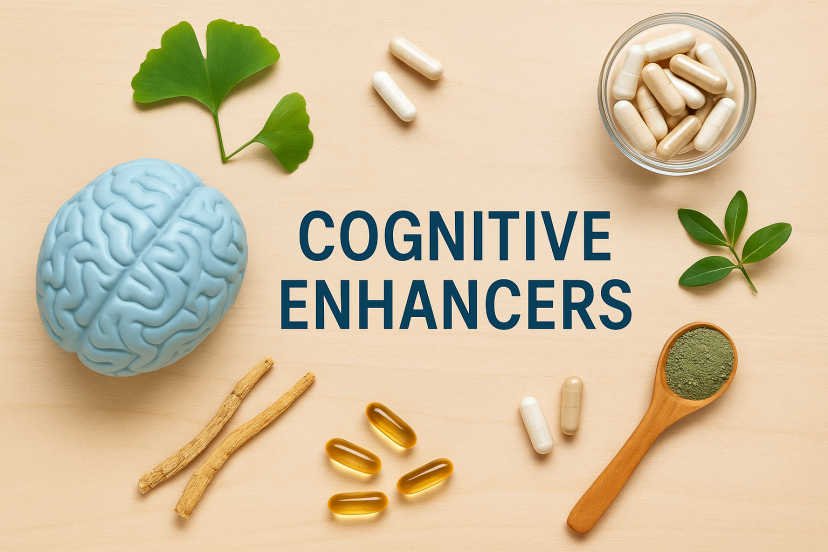
Cognitive enhancers are either natural or synthetic substances designed to support specific aspects of mental performance. People turn to them for sharper focus, better motivation, improved memory, faster processing speed, and more extensive mental endurance. In many cases, they’re used to bridge the gap between how one wants to think and how his or her brain performs under stress, fatigue, or constant distractions.
You might also come across the term nootropics, which was first used to refer to substances that enhance learning and cognition without doing harm. The term has since been expanded to include herbal extracts, nutrients, adaptogens, amino acids, and synthetic substances all influencing brain health in a variety of different ways.
Although the category has expanded, the central goal hasn’t changed: cognitive enhancers are meant to support the brain so you can think more clearly, stay mentally organized, and function at your best throughout the day.

How Cognitive Enhancers Work in the Brain
Different enhancers work in different ways, but most influence one of three major pathways.
1. Neurotransmitter Support
Your brain communicates through chemical messengers like acetylcholine, dopamine, serotonin, and glutamate. When these pathways work well, you think more clearly.
- L-theanine helps regulate dopamine and serotonin to create calm focus.
- Citicoline boosts acetylcholine for memory and learning.
A smoother neurotransmitter balance often means better concentration and mental stability.
2. Blood Flow and Brain Energy
Some cognitive enhancers improve blood flow, allowing more oxygen and glucose to reach the brain. Others boost ATP, the energy molecule your brain uses for higher-level thinking.
For example, Ginkgo biloba has been widely studied for its ability to increase cerebral blood flow, which may support memory and processing speed.
3. Stress and Mood Regulation
Chronic stress is one of the biggest barriers to mental clarity. Adaptogens help regulate cortisol and reduce the mental “static” that stress brings.
- Ashwagandha
- Rhodiola rosea
These can make thinking feel smoother and more grounded.
Natural vs. Synthetic Cognitive Enhancers
You’ll find two main categories, each with its place.
Natural Options
These come from herbs, nutrients, amino acids, and plant extracts. They’re popular because they support steady improvement with fewer side effects.
Some well-known natural enhancers include:
- Bacopa monnieri
- Ginkgo biloba
- Rhodiola
- L-theanine
- Citicoline
If you’re exploring food-based ways to support mental performance, you may enjoy this helpful guide on brain-boosting foods.
Synthetic Options
These include racetams, lab-formulated nootropics, and prescription stimulants used only under medical supervision. They often work quickly and intensely but may have more safety considerations.
Benefits You May Experience
People turn to cognitive enhancers for different reasons, but the reported benefits tend to be consistent:
- Improved focus and concentration
- Better memory recall
- Enhanced mental clarity
- More motivation
- Less brain fog
- Increased mental endurance
- Greater resilience under stress
Most users describe the feeling as being more “switched on” or mentally organized.
Are Cognitive Enhancers Safe?
For most healthy adults, natural cognitive enhancers are considered safe when used properly. Your safety largely comes down to using the right dose, choosing clean formulations, and understanding your own sensitivity to specific ingredients.
Here are a few important guidelines:
- Start with the lowest effective dose.
- Stick to high-quality brands with third-party testing.
- Don’t mix too many new ingredients at once.
- Speak with a doctor if you take medication or have a condition.
Synthetic options require much more caution and should only be used if prescribed.
5 Best Cognitive Enhancers
Below are carefully selected products based on ingredient quality, user reviews, and reported effectiveness.
1. Double Wood Citicoline (CDP-Choline)
Citicoline is a top-tier memory and focus ingredient. It helps support acetylcholine production and promotes healthy brain-cell membranes.
2. Nature’s Craft Neuro Health
A balanced formula with Bacopa, DMAE, and Vitamin B12. Many users rely on it for everyday mental clarity and overall cognitive balance.
3. Himalaya Organic Ashwagandha
Ideal for people whose focus suffers from stress. Ashwagandha helps regulate cortisol and supports calm concentration.
4. Nutricost L-Theanine
Popular for producing relaxed alertness. Often paired with caffeine for smoother, steadier focus.
5. NOW Foods Rhodiola Rosea
Useful for improving stamina, fighting mental fatigue, and supporting motivation on busy days.
Scientific Research on Cognitive Enhancers
Beyond single trials, a few major studies provide strong support for using cognitive enhancers in the real world. In 2021, researchers published a double-blind, placebo-controlled trial in The Journal of Nutrition examining citicoline in healthy older adults. After twelve weeks, those who took citicoline showed significant improvements in overall memory—particularly episodic recall—compared with the placebo group. This supports citicoline’s growing reputation as one of the most reliable focus and memory enhancers.
Another important resource comes from a 2023 systematic review in Critical Reviews in Food Science and Nutrition. The authors analyzed over 250 human studies on plant-based nootropics like Bacopa monnieri, Ginkgo biloba, and Panax ginseng. They found consistent evidence that Bacopa improves learning and memory, while Ginkgo enhances perceptual and motor abilities. These findings strengthen the idea that certain natural enhancers offer measurable cognitive benefits that align with user experiences.

How to Choose the Right Cognitive Enhancer
Choosing the right cognitive enhancer starts with understanding what you want to improve. Everyone’s brain has different pressure points—some people struggle with focus, others with stress, and some simply want to feel sharper throughout the day. Once you know your goal, it becomes much easier to match it with the right ingredient.
Here’s a simple guide to help you decide:
- Memory: Bacopa monnieri, Citicoline
If recall and learning speed are your main concerns, these two offer strong support. Bacopa helps long-term memory formation, while citicoline fuels the pathways responsible for quick and accurate recall. - Stress-related brain fog: Ashwagandha, Rhodiola
When stress makes your mind feel heavy or unfocused, adaptogens can help restore clarity by balancing cortisol and improving mental resilience. - Focus and mental energy: Citicoline, L-theanine
Citicoline boosts brain energy at a cellular level, and L-theanine helps you stay alert without the jittery edge that often comes from caffeine alone. - Motivation: Rhodiola, Tyrosine
If you want the mental drive to start tasks and stay engaged, these ingredients support dopamine-related pathways that influence motivation and mood. - Everyday clarity: Multi-ingredient blends
For general cognitive support, well-designed blends offer balanced benefits across focus, memory, and mood.
If you’re new to cognitive enhancers, start with one ingredient at a time. This helps you understand how your body responds and ensures you gain the benefits without overwhelming your system.
Final Thoughts
Cognitive enhancers aren’t shortcuts, but they can make a real difference in how clearly you think and how consistently you perform. When paired with quality sleep, daily movement, and nutrient-rich food, their effects often become even stronger. If you’re curious, start slowly, listen to your body, and choose well-tested formulas. With the right approach, you can support your brain in a way that feels natural and sustainable.
FAQs
1. Are cognitive enhancers and nootropics the same thing?
Not exactly. All nootropics are cognitive enhancers, but not all cognitive enhancers meet the original criteria of non-toxicity and long-term safety.
2. How quickly do cognitive enhancers work?
Some work within an hour (like L-theanine), while others—such as Bacopa—take a few weeks to build measurable benefits.
3. Can I combine multiple enhancers?
You can, but beginners should start with one ingredient before exploring “stacks.”
4. Are natural enhancers safer?
Generally, yes. Natural enhancers typically have gentler effects and fewer side risks.
5. Do cognitive enhancers help with anxiety?
Some can. L-theanine and ashwagandha are especially known for promoting calm focus without sedation.