
How To Create A Healthy Brain Routine

We may earn a commission for purchases made using our links. Please see our disclosure for more details.
A healthy brain routine doesn’t need to be complicated or overwhelming. It’s simply a set of daily habits that help you stay focused, think clearly, and protect your memory over time. Your brain drives everything you do — from decisions and productivity to mood and energy — so how you care for it each day matters. Small, consistent actions like quality sleep, regular movement, balanced nutrition, and stress management can shape how well your mind performs. In this guide, you’ll find practical, research-backed steps you can start using right away to support long-term brain health.
What Is a Healthy Brain Routine?
A Healthy Brain Routine is a structured set of daily habits that support:
- Memory
- Focus
- Emotional balance
- Stress resilience
- Long-term cognitive health
Instead of relying on bursts of motivation, you design your environment and schedule to support your brain automatically.
Think of it as mental hygiene. Just like brushing your teeth protects your smile, daily cognitive habits protect your clarity.
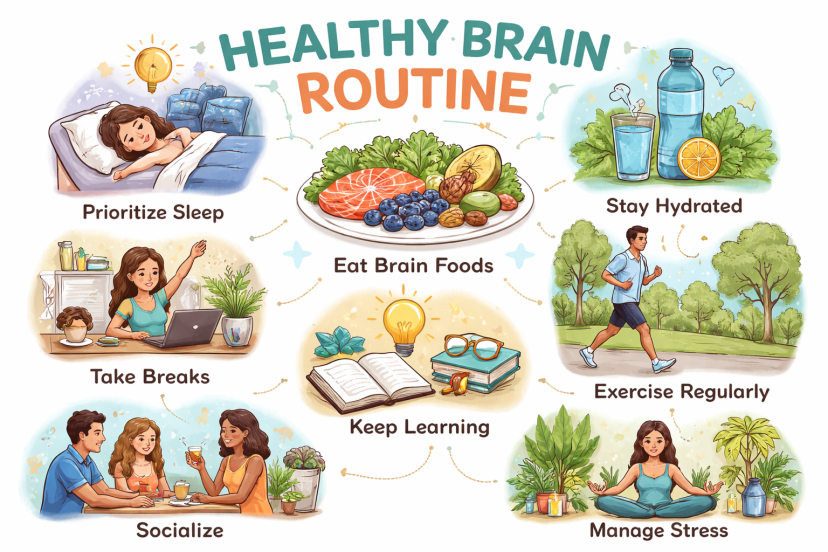
The Morning Foundation: Start Strong
Your morning sets the tone for your entire day. When your morning feels chaotic, the rest of your day usually follows that pattern. If you start intentionally, your brain follows.
Hydration and Light Exposure
First, drink water. Even slight dehydration can reduce focus and short-term memory performance. Next, get natural sunlight within 30 minutes of waking. Light regulates your circadian rhythm, which improves focus later in the day.
Simple. Effective. Free.
Brain-Boosting Breakfast Choices
Skip heavy sugar. Even slight dehydration can reduce focus and short-term memory performance. Eggs, berries, nuts, and Greek yogurt support stable energy and neurotransmitter production.
For example, omega-3 fatty acids play a structural role in brain cell membranes. Without them, cognitive function suffers.
Movement That Wakes Up the Mind
You don’t need a full workout. A 10-minute brisk walk increases blood flow to the brain. As a result, you think more clearly and react faster.
Consistency beats intensity.
Nutrition That Fuels Cognitive Performance
Your brain consumes roughly 20% of your body’s energy. Therefore, what you eat directly affects how you think.
Omega-3s and Brain Structure
Research published in Frontiers in Aging Neuroscience links higher omega-3 intake to better memory performance. These fatty acids support neuron communication and reduce inflammation.
Focus on meals that include protein, healthy fats, and fiber to support steady energy.
Adaptogens and Stress Resilience
Chronic stress shrinks mental performance. However, adaptogenic herbs may support resilience.
For example, rhodiola rosea has been studied for reducing mental fatigue and improving focus under stress. If you’re curious about high-quality options, this detailed guide on the best rhodiola rosea supplement explains what to look for and why purity matters.
Adaptogens don’t replace healthy habits. Instead, they complement them.
Antioxidants and Cognitive Protection
Oxidative stress damages brain cells over time. Fortunately, antioxidant-rich foods like blueberries and dark leafy greens help counteract this damage.
In fact, a study in The Journal of Agricultural and Food Chemistry found that blueberry consumption improved cognitive performance in older adults.
Food can be powerful medicine.

Supplements That May Support Brain Health
While food should come first, certain supplements may help fill nutritional gaps:
- Omega-3 fish oil
- Magnesium glycinate
- B-complex vitamins
- Rhodiola rosea
- Lion’s mane mushroom
However, quality matters. Look for products that offer independent testing and clear ingredient labeling.
Daily Mental Training Habits
Your brain strengthens with use. Just like muscles, it adapts to challenge.
Deep Focus Blocks
Practice 25–50 minute distraction-free work sessions. Turn off notifications. Close extra tabs.
Over time, your attention span expands.
Memory Practice
Try simple exercises:
- Recall yesterday’s meals
- Memorize a short quote
- Play memory-based games
Small daily reps build long-term resilience.
Learning Something New
Learning creates new neural pathways. Read a chapter. Practice a language. Try a musical instrument.
Novelty keeps your brain plastic.
Movement and Brain Performance
Exercise increases Brain-Derived Neurotrophic Factor (BDNF), often called “fertilizer for the brain.” Higher BDNF supports memory and learning.
You don’t need extreme training. Strength training, walking, cycling, and yoga all improve cognitive outcomes.
Furthermore, regular exercise reduces depression and anxiety, which indirectly protects cognitive health.

Stress Management and Recovery
Chronic stress damages the hippocampus, the brain’s memory center. Therefore, managing stress is not optional.
Try:
- Box breathing
- Short meditation sessions
- Journaling
- Time in nature
Even five minutes of controlled breathing lowers cortisol.
You can’t eliminate stress entirely. But you can regulate your response.
Evening Routine for Brain Repair
Sleep Optimization
Sleep is when your brain clears metabolic waste. While you’re in deep sleep, the brain’s glymphatic system clears out waste that builds up during waking hours.
Most adults need roughly 7–9 hours of sleep nightly to support optimal mental and physical performance.
To improve sleep:
- Dim lights 1 hour before bed
- Avoid caffeine after 2 PM
- Keep your bedroom cool
Digital Wind-Down
Blue light disrupts melatonin production. Instead of scrolling, read a physical book or stretch lightly.
Your brain needs cues to power down.
Recommended Products
- Nordic Naturals Ultimate Omega Fish Oil – High-quality omega-3 supplement with strong third-party testing.
- Thorne Basic B-Complex – Supports energy metabolism and neurotransmitter production.
- Natural Stacks MagTech Magnesium Supplement – Combines three forms of magnesium for cognitive and sleep support.
- Host Defense Lion’s Mane Capsules – Popular mushroom supplement studied for neuro-supportive compounds.
- NOW Rhodiola 500 mg – Standardized extract commonly used for stress resilience and mental endurance.
What Research Shows About Brain Health
Strong scientific evidence supports building a Healthy Brain Routine.
The 2024 Lancet Commission on Dementia Prevention, Intervention, and Care reviewed global research and concluded that up to 45% of dementia cases may be preventable or delayed by addressing modifiable risk factors. These include physical inactivity, smoking, diabetes, depression, hearing loss, and social isolation.
This reinforces a key point: brain health is shaped by lifestyle choices, not genetics alone.
Research on aerobic exercise and hippocampal growth (Erickson et al., 2011) showed that regular cardio increased the size of the memory center of the brain by about 2%, helping reverse normal age-related shrinkage. Participants also demonstrated measurable improvements in memory performance.
The hippocampus is essential for learning and forming new memories. Structural growth in this region reflects meaningful biological change.
A Healthy Brain Routine aligns with strong scientific evidence. Consistent lifestyle habits compound over time.
Conclusion
A Healthy Brain Routine is built through small, consistent habits. Prioritize sleep, move regularly, eat well, and manage stress. These daily actions compound over time and support focus, memory, and long-term cognitive health. Begin with a single habit, stay consistent, and expand gradually.
FAQs
1. What is a Healthy Brain Routine?
A Healthy Brain Routine is a structured set of daily habits that support memory, focus, stress resilience, and long-term cognitive health.
2. How quickly can you expect noticeable improvements?
Most people notice improved clarity within 2–4 weeks of consistent lifestyle changes.
3. Do you actually need supplements to support brain health?
Not always. A balanced diet often provides sufficient nutrients. When dietary intake falls short, supplements may help address specific nutrient gaps.
4. How much sleep supports optimal brain function?
For optimal recovery and cognitive performance, aim for seven to nine hours of uninterrupted sleep nightly.
5. Can stress permanently damage the brain?
Chronic unmanaged stress may impair memory and mood regulation. However, stress management practices can help reverse negative effects over time.