
10 Nervous-System-Friendly Practices to Reduce Overthinking
We may earn a commission for purchases made using our links. Please see our disclosure for more details.
Overthinking can make even the smallest issue seem like a mountain to climb. You may find yourself replaying conversations over and over in your head, questioning decisions you’ve made or lying awake at night with your mind racing. These nervous-system-friendly practices can help calm your nervous system down, helping you feel more grounded and able to handle stress with a bit more confidence. Rather than trying to shut off your thoughts cold-turkey, they work on helping your body wind down first – which can make it a lot more easier to clear your head and get back on track.
What Does “Nervous-System-Friendly” Mean?
When you hear the term “Nervous-System-Friendly” you don’t need to imagine some kind of actual medical diagnosis. It’s just a helpful wellness term used to describe habits that don’t leave you feeling overwhelmed. It’s about finding ways to ease off that high-strung feeling and slide into a calmer state.
You don’t have to feel relaxed all day to have a healthy nervous system. They actually move back and forth between “go” and “recharge” all the time. What you want is flexibility or the ability to respond to something that throws you off track. And then wind down once the storm has passed.

1. Slow Your Breathing Without Forcing It
Start by letting your exhale last slightly longer than your inhale. You might breathe in for four counts and out for six, using a comfortable pace rather than taking huge breaths.
Try this for one to five minutes. If you begin to feel lightheaded or uneasy, return to your normal breathing pattern. A randomized study on brief structured breathing practices found that short daily breathwork improved mood and reduced respiratory rate, although individual responses can vary.
2. Orient to the Room Around You
Overthinking pulls your attention into an imagined future or a replayed past. Orienting brings it back to the place where your body is sitting right now.
Slowly look around and name five neutral details. You might notice a window, a blue mug, the hum of a fan, sunlight on the floor, or the support of your chair.
You are not pretending everything is perfect. You are simply giving your brain current information instead of letting it work only with mental predictions.
3. Choose Rhythmic, Low-Pressure Movement
A brisk workout can feel great, but it is not the only useful option. Walking, gentle cycling, stretching, swaying to music, or doing a few slow squats can help release restless energy.
Keep the effort easy enough that you can breathe comfortably and notice your surroundings. Even ten minutes counts.
The best movement is often the one that leaves you feeling more settled, not punished for missing yesterday’s workout.
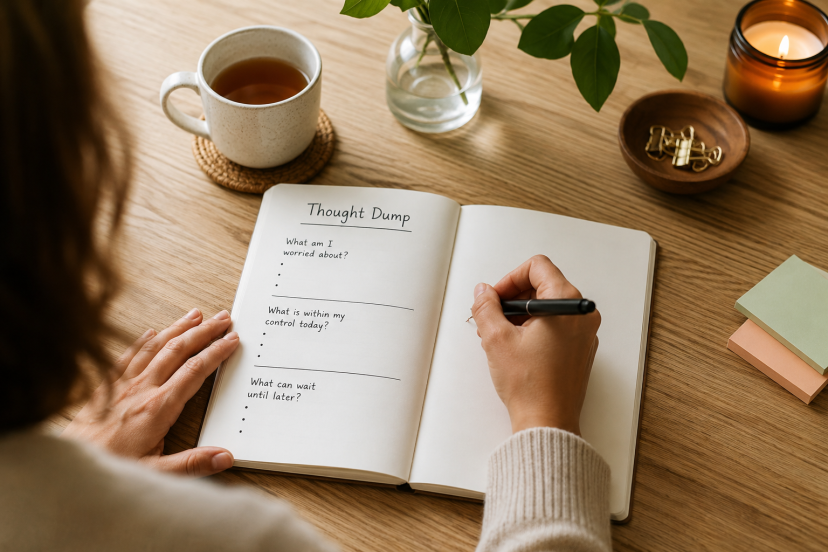
4. Put the Thought on Paper
A looping thought often stays loud because your brain is trying not to lose it. Writing it down gives the concern somewhere else to live.
Divide a page into three prompts:
- What am I worried about?
- What is within my control today?
- What can wait until later?
Give yourself five minutes to write, then close the exercise when the timer ends. This boundary keeps journaling from turning into overthinking with nicer stationery.
You can return to the page during a planned “worry period” later in the day. Until then, remind yourself that the concern has been recorded and does not need continuous mental supervision.
5. Use a Simple Sensory Anchor
Choose one clear physical sensation and give it your full attention for 30 to 60 seconds. Hold a cool glass, press your feet into the floor, wrap your hands around a warm mug, or notice the texture of a blanket.
Avoid painful or extreme sensations. The purpose is not to shock yourself out of a feeling. It is to offer your attention a steady, present-moment target.
When your thoughts wander, return to the sensation without criticizing yourself. Wandering is what minds do. Returning is the practice.

6. Reduce Stimulation Before Adding Supplements
When your mind races, it is tempting to search for the perfect nootropic stack. First, check the basics: caffeine timing, skipped meals, dehydration, constant notifications, and late-night screen use.
Caffeine can be useful, but more is not always better, especially when you already feel keyed up. Eat regularly, drink enough fluid, and notice whether afternoon caffeine affects your sleep or evening thoughts.
Discuss supplements with a healthcare professional if you take medication, are pregnant, or have a medical condition. Even plant-based or naturally sourced supplements may cause side effects or interact with medications.
Nutrition also supports long-term brain health. This guide to antioxidants for brain health explains how antioxidant-rich foods can fit into a broader, food-first approach.
7. Create a Low-Input Window
Your brain needs moments when it is not processing messages, videos, news, and unfinished tasks at the same time. Choose a 10- to 20-minute low-input window each day.
Silence nonessential alerts, put your phone out of reach, and do one ordinary activity. Fold laundry, wash dishes, water plants, or sit outside without listening to a podcast.
Boredom may show up at first. Let it. A quieter mind often needs a little runway before it settles.
A low-input window can be especially useful after work. It creates a buffer between the demands of the day and the rest of your evening.
8. Borrow Calm Through Safe Connection
Human nervous systems respond to other people. A calm conversation, shared meal, quiet walk, or reassuring voice can make an intense thought feel less consuming.
Reach out to someone who listens without turning every concern into a debate. You can say, “I do not need a solution yet. Could you stay with me while I sort this out?”
Clear requests make support easier for both people. They also prevent well-meaning advice from adding another pile of thoughts to process.
If talking feels difficult, simply sitting near a trusted person or pet may provide a sense of company without demanding much energy.
9. Release Muscle Tension Gradually
Progressive muscle relaxation helps you notice the difference between tension and release. Gently tense one muscle group for about five seconds, then relax it for ten.
Move from your feet toward your face, keeping the effort mild. Skip any painful, injured, or sensitive area.
If tensing feels unpleasant, use a softer version. Bring your attention to each area and imagine it becoming heavier or less guarded.
This practice can be helpful when your thoughts feel abstract but your body clearly feels tight. Relaxing your jaw, shoulders, hands, and stomach gives you a concrete place to begin.
10. Build a Predictable Evening Landing
Overthinking often gets louder when the day finally becomes quiet. Give your brain a repeatable path toward sleep rather than expecting it to switch off on command.
Dim the lights, write tomorrow’s first task on paper, reduce stimulating content, and follow the same two or three steps each night. You might wash your face, stretch for five minutes, and read a familiar book.
Consistency matters more than building an elaborate “perfect” routine. A complicated bedtime checklist can easily become one more thing to overthink.
A systematic review found that mindfulness-based interventions may improve ruminative thinking, although they were not clearly more effective than cognitive behavioral therapy. Simple practices can help, but professional treatment remains valuable when symptoms continue.
How to Make These Practices Stick
Pick one practice that feels almost too easy. Attach it to something you already do, such as taking three slower breaths after closing your laptop or writing one controllable next step before bed.
Use the practice before you feel completely overwhelmed. Skills become easier to access during stressful moments when you have rehearsed them during calmer ones.
Notice whether the habit leaves you calmer, more activated, or unchanged. Nervous-system-friendly care is personal. A technique that helps your friend may not suit you, and you do not earn bonus points for forcing it.
Give a practice several gentle attempts, but allow yourself to replace it when it consistently feels unhelpful.
Practical Tools to Help Reduce Overthinking
These tools are optional. None replaces medical care, nervous-system-friendly practices, nutritious food, movement, adequate sleep, or supportive relationships.
1. Moonbird Handheld Breathing Coach
The Moonbird Handheld Breathing Coach provides a physical pacing cue for breathing exercises. It may suit people who struggle to follow counting instructions or phone-based breathing animations.
2. Yogasleep Dohm Classic White Noise Machine
The Yogasleep Dohm Classic White Noise Machine can mask inconsistent background sounds during sleep, meditation, or a low-input break.
3. MZOO Sleep Eye Mask
The MZOO Sleep Eye Mask offers a simple way to reduce light exposure during bedtime, travel, or daytime rest.
4. Florensi Meditation Cushion
The Florensi Meditation Cushion creates a designated place for breathing, mindfulness, stretching, or a short pause away from screens.
5. The Five Minute Journal by Intelligent Change
The Five Minute Journal provides structured prompts for people who want to journal but tend to stare suspiciously at blank pages.
Conclusion
Reducing overthinking is not about winning an argument with your brain. It is about giving your body and attention enough steadiness that thoughts no longer control the whole room. Start with one of these Nervous-System-Friendly Practices and keep it small. A slower exhale, a short walk, or five minutes away from notifications may seem simple. However, simple habits are easier to repeat, and repetition is where meaningful support begins.
FAQs
What causes overthinking?
Overthinking can grow from stress, uncertainty, perfectionism, poor sleep, anxiety, or a habit of trying to prevent every possible mistake. Sometimes it is connected to a mental health condition. Overthinking can stem from different habits, experiences, and stressors for each person.
How quickly can a nervous-system-friendly practices help?
Some people notice a small shift within a few minutes. Others need repetition before a practice feels useful. Aim for a modest change, such as moving from an eight out of ten in tension to a seven, rather than demanding instant calm.
Can breathwork make anxiety worse?
Certain breathing exercises can feel uncomfortable, especially when they involve breath holding, rapid breathing, or unusually deep breaths. Keep your breathing gentle and stop if your symptoms increase. A healthcare professional can help you choose an appropriate technique.
Are supplements necessary for reducing overthinking?
No. Supplements are not required for Nervous-System-Friendly Practices, and they should not replace professional treatment. Some products can interact with medications or health conditions, so discuss them with a qualified clinician before use.
When should I seek professional support?
Reach out when overthinking causes significant distress, regularly disrupts sleep, triggers panic, affects your work or relationships, or makes ordinary tasks difficult. Seek urgent local assistance if you believe you may harm yourself or someone else.