Benefits Of Choline Rich Foods For The Brain

We may earn a commission for purchases made using our links. Please see our disclosure for more details.
Feeling mentally sharp starts with more than coffee or a popular nootropic. Your brain also needs basic nutrients to work properly, and choline is one worth paying attention to. Choline rich foods help your body make an important brain messenger and maintain healthy cells. Eggs, fish, soybeans, and even potatoes can all contribute.
But does eating more choline actually improve memory? Let’s look at what it does, what research says, and which foods make it easy to get enough.
What Is Choline and Why Does the Brain Need It?
Choline is an essential nutrient. Your liver makes a little, but not enough to cover your needs, so food supplies the rest. Although people often group it with B vitamins, choline is its own nutrient.
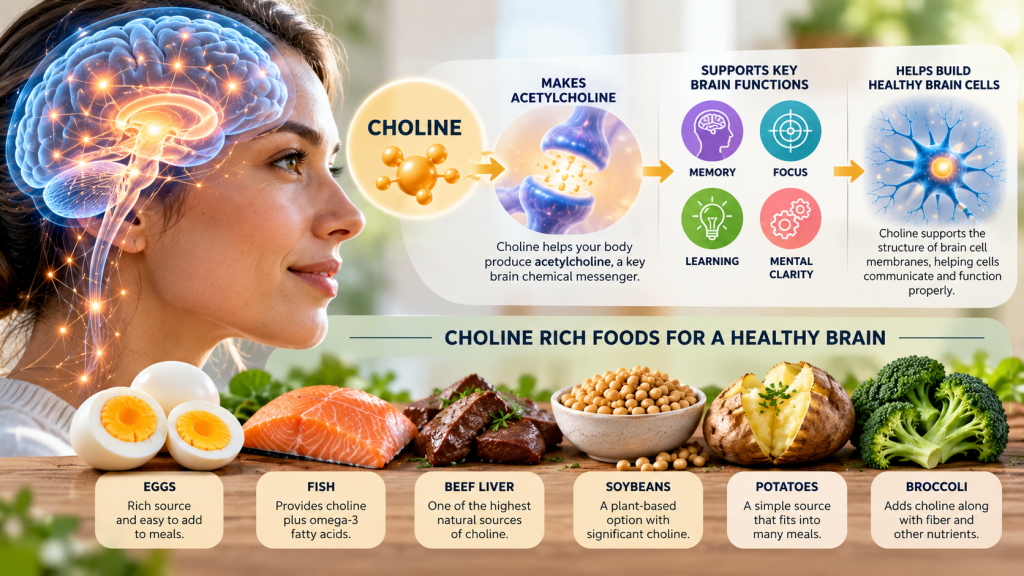
Your body uses it to make acetylcholine, a chemical messenger involved in memory, attention, muscle control, and other nervous-system functions. Choline also helps build the membranes around cells, including brain cells.
That makes adequate intake important. It doesn’t mean extra choline will automatically make you think faster or remember more.
Benefits of Choline Rich Foods for Brain Health
Supports normal memory and attention
Acetylcholine helps nerve cells communicate during learning and memory tasks. Eating enough choline gives your body a necessary ingredient for producing it.
This supports normal brain function, but there’s a difference between meeting a nutritional need and getting a measurable mental boost from a supplement.
Helps maintain healthy brain cells
Choline contributes to phosphatidylcholine, a major component of cell membranes. These membranes protect cells and help them communicate with surrounding tissues.
The brain depends on healthy cell structures throughout life. Choline plays a supporting role alongside protein, healthy fats, vitamins, and other nutrients.
Matters during early brain development
Choline is especially important during pregnancy because developing brain and nervous-system tissues need it. The body’s requirements rise during pregnancy and breastfeeding.
Anyone planning a pregnancy should review their diet and prenatal supplement with a healthcare professional. Many prenatal supplements provide only a small amount of choline, while some leave it out entirely.
What Does the Research Say About Choline and Cognition?
A 2026 systematic review and meta-analysis of observational studies pooled data from nine independent cohorts involving 218,378 people. Higher dietary choline intake was linked with lower odds of cognitive impairment or decline. However, the study could not prove that choline itself caused the difference.
The National Institutes of Health’s choline review also notes associations between choline intake and memory in some adult studies. Yet trials of choline supplements have not consistently shown cognitive improvements in healthy adults.
So the practical goal is to get enough choline through a balanced diet, not to treat foods or supplements as a proven way to prevent dementia.
Best Choline Rich Foods to Add to Your Diet
Choline appears in both animal and plant foods. Some foods pack more choline into a single serving than others. Here’s how they compare:
| Food | Serving | Choline |
| Beef liver, cooked | 3 oz | 356 mg |
| Hard-boiled egg | 1 large | 147 mg |
| Lean beef, cooked | 3 oz | 117 mg |
| Roasted soybeans | ½ cup | 107 mg |
| Chicken breast, roasted | 3 oz | 72 mg |
| Cod, cooked | 3 oz | 71 mg |
| Baked red potato | 1 large | 57 mg |
| Kidney beans | ½ cup | 45 mg |
| Brussels sprouts, cooked | ½ cup | 32 mg |
Actual choline content depends on the food and cooking method. Source: NIH Office of Dietary Supplements.
Eggs and animal foods
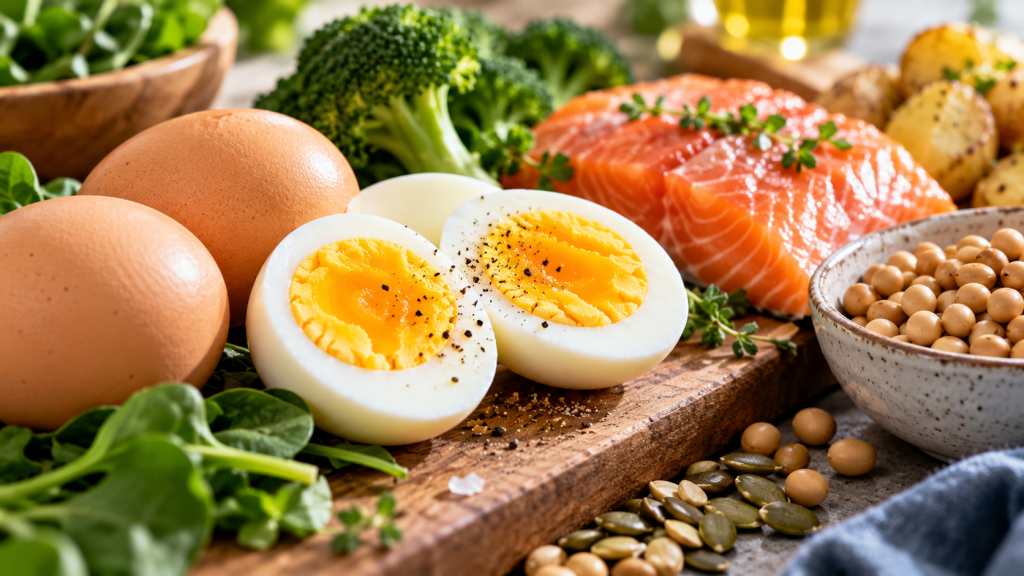
Eggs stand out because they’re easy to cook and widely available. Most of their choline sits in the yolk, so egg whites alone provide much less. Meat, fish, and dairy can round out your intake.
Liver contains a large amount, but it doesn’t need to be an everyday food. It’s also very high in preformed vitamin A, which matters particularly during pregnancy.
Plant-based options
Roasted soybeans, kidney beans, broccoli, quinoa, and potatoes contribute useful amounts. Individual portions generally provide less than eggs or liver, so variety matters when you eat mostly plants.
Pair beans with quinoa and vegetables, or add soybeans to a grain bowl. A few different sources across the day can make a real difference.
Daily Choline Requirements: How Much Is Enough?
Adult men should aim for around 550 mg of choline per day, while adult women need approximately 425 mg. During pregnancy, the recommended amount increases to 450 mg daily, then to 550 mg while breastfeeding.
These are adequate intake estimates, not exact requirements for every person. Age, overall diet, and life stage affect your needs. You don’t need to hit the number perfectly at every single meal.
Easy Ways to Eat More Choline
You can improve your intake without building your whole diet around one ingredient.
- Breakfast: Try a whole egg with whole-grain toast and vegetables.
- Lunch: Add chicken, roasted soybeans, or beans to a salad.
- Dinner: Serve fish with a baked potato and Brussels sprouts.
- Snacks: Mix roasted soybeans into trail mix or add yogurt to your afternoon routine.
Keep your meals varied. Eggs and soybeans contribute choline, but vegetables, fish, and whole grains bring other nutrients that matter for brain health too.
Choline Rich Foods vs. Choline Supplements
Food provides choline together with protein, vitamins, minerals, and other helpful compounds. That’s why it makes sense to check your meals before shopping for capsules.
Supplements contain forms such as choline bitartrate, phosphatidylcholine, citicoline, and Alpha-GPC. Their labels may use similar brain-health language, but their doses and research differ.
If you’re curious about how one popular nootropic compares, this guide to Alpha-GPC benefits for brain health explains the ingredient in more detail.
Consider supplements when your diet falls short or a clinician identifies a specific need. Taking one doesn’t guarantee better focus or memory.
Recommended Products
These five products offer different supplemental forms of choline. They’re options to compare, not essentials for everyone.
- NOW Foods Choline & Inositol — A combination capsule if you’re comparing basic choline formulas.
- NOW Foods Sunflower Lecithin 1200 mg — Provides lecithin containing phosphatidylcholine; the lecithin weight is not the same as the amount of choline.
- Jarrow Formulas Citicoline (CDP Choline) — A citicoline option for those researching choline-based nootropics.
- NOW Foods Alpha GPC 300 mg — A concentrated choline-containing compound marketed for cognitive support.
- Nutricost CDP Choline (Citicoline) — Another citicoline formula for comparing serving sizes and ingredient lists.
Can You Get Too Much Choline?
Yes, especially when you combine several supplements. Excess intake can cause a fishy body odor, sweating, nausea or vomiting, low blood pressure, and other unwanted effects.
Adults should keep their total daily choline intake below 3,500 mg, including both food and supplements. This limit helps prevent excessive intake and isn’t an amount you should aim to reach. Ask a healthcare professional before taking high doses, particularly during pregnancy or when managing a medical condition.
Conclusion
Choline rich foods supply a nutrient your brain needs for normal signaling and healthy cell membranes. Eggs, soybeans, fish, meat, potatoes, and beans can all help you meet your daily intake. Research suggests a possible link between dietary choline and healthier cognition, but it doesn’t promise sharper memory from eating extra. Focus on steady, varied meals first, and treat supplements as a choice to assess carefully.
FAQs
1. Which food has the most choline?
Beef liver is among the richest common sources, with around 356 mg in a cooked three-ounce serving. A large hard-boiled egg provides about 147 mg and is often easier to eat regularly. Different foods can help you reach your daily intake without relying on liver.
2. How does the choline in eggs support brain health?
Egg yolks provide choline, which your body uses to make acetylcholine and maintain cell membranes. Eggs also contain protein and several essential vitamins and minerals. They’re a practical addition to a balanced diet, although eating eggs alone won’t guarantee better memory or concentration.
3. Can choline rich foods improve memory?
Choline supports processes involved in memory. Some observational studies link higher dietary intake with better cognitive outcomes, but that doesn’t prove cause and effect. Eating enough supports normal function; taking more than you need has not been shown to reliably improve memory.
4. Can vegetarians and vegans get enough choline?
Yes, but they may need to plan more carefully. Soybeans, beans, quinoa, potatoes, and cruciferous vegetables all provide choline. Vegetarians who eat eggs or dairy have additional options. A dietitian can help assess intake if you avoid most animal foods.
5. Should I take a choline supplement every day?
Not necessarily. First look at how much choline you get through food and whether your life stage changes your needs. Supplements may be helpful for some people, but routine use hasn’t been proven to boost cognition in healthy adults. Talk to your healthcare provider before adding a choline supplement to your daily routine.