Oat Straw Tea for Brain Health: Does It Really Help?

We may earn a commission for purchases made using our links. Please see our disclosure for more details.
Can a cup of herbal tea really help you think more clearly and remember things better? That’s what makes oat straw tea an interesting topic for anyone exploring natural ways to support brain health. Made from the green stems and leaves of the oat plant, this caffeine-free drink has traditionally been used to promote relaxation and general well-being. More recently, researchers have studied whether compounds found in green oats could influence memory, attention, and cognitive performance. But there’s an important difference between the concentrated extracts used in scientific studies and the tea you brew at home. So, what does the evidence actually tell us, and is oat straw worth adding to your daily routine?
What Is Oat Straw Tea?
Oat straw tea is prepared by steeping the dried leaves and stalks of Avena sativa, the botanical name for the common oat plant, in hot water.
Unlike oatmeal, which comes from mature oat grains, oat straw comes from the plant’s green portions. These parts contain naturally occurring plant compounds, including flavonoids and other polyphenols.
The resulting tea has a mild, grassy flavor with slightly sweet, earthy notes. It contains no caffeine unless blended with caffeinated ingredients.
Traditional herbal practices have used oat straw preparations to promote relaxation and support general well-being. However, their reputation for improving brain function requires closer scientific examination.
Why Is Oat Straw Linked to Brain Health?
Interest in oat straw comes partly from the bioactive compounds found in green oat plants.
Researchers have identified several potentially interesting substances:
- Flavonoids: Plant compounds studied for antioxidant activity.
- Avenanthramides: Phenolic compounds found in oats that have demonstrated antioxidant properties in laboratory research.
- Triterpene saponins: Naturally occurring compounds that may contribute to the biological activity of certain oat extracts.
These substances offer possible explanations for researchers’ interest in oats and cognition.
However, identifying beneficial compounds in a plant doesn’t prove that drinking an infusion improves memory or protects brain cells. Their concentrations, absorption, and actual effects in humans remain important questions.
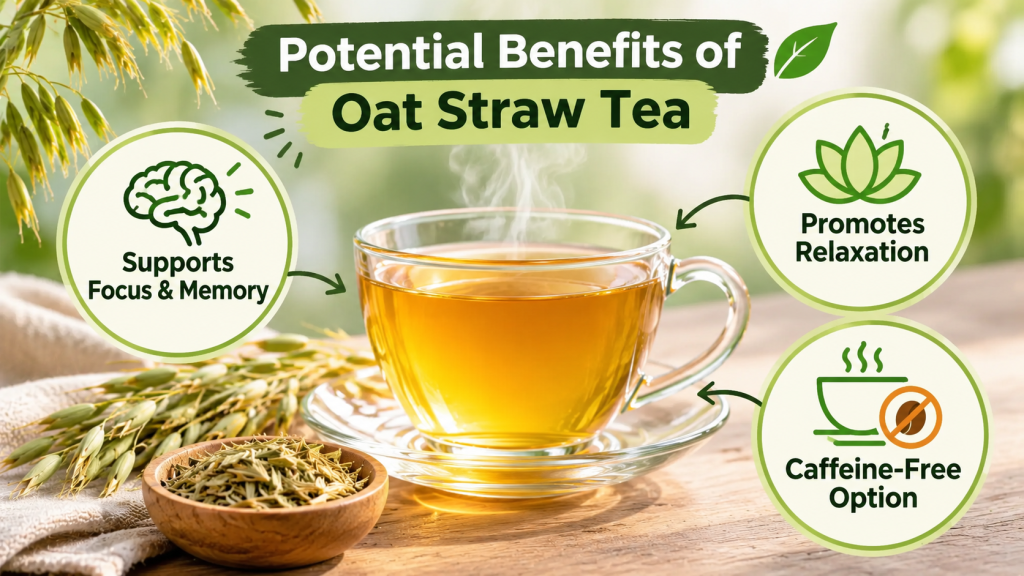
Potential Benefits of Oat Straw Tea
May Support Attention and Memory
Some studies involving concentrated green oat extracts have reported improvements in working memory, information processing, and attention-related tasks.
Working memory helps you temporarily hold information while using it, such as remembering instructions or following a conversation.
These findings are promising, but researchers have not established that ordinary oat straw tea produces comparable results.
Traditionally Used for Relaxation
Oat herb has traditionally been used to ease mild mental stress.
The European Medicines Agency’s assessment of oat herb recognizes its traditional use for mild stress symptoms and sleep support. However, the agency emphasizes that this recognition relies on historical use rather than sufficient clinical evidence.
European Medicines Agency (EMA)
For someone who enjoys calming evening routines, an oat straw infusion may be a pleasant caffeine-free option.
Provides an Alternative to Caffeinated Drinks
Coffee and energy drinks can increase alertness, but they aren’t always suitable late in the day.
Oat straw offers a caffeine-free alternative that won’t add to your daily stimulant intake.
Choosing herbal tea instead of an afternoon coffee may also help you avoid caffeine-related sleep disruption, depending on your sensitivity.
What Does Scientific Research Actually Say?
Most human research has examined concentrated oat extracts rather than brewed herbal tea.
A 2020 Study Found Improvements in Cognitive Tasks
A randomized clinical trial published in Nutrients examined green oat extract in 132 healthy adults aged 35–65.
Participants received different doses of the extract or a placebo for 29 days.
Researchers observed improvements in certain working-memory and multitasking measures, particularly with specific doses. However, the extract did not produce significant treatment-related improvements in mood.
PubMed
These findings suggest that particular oat extracts deserve further investigation.
A 2023 Review Found Mixed Evidence
A systematic review published in Clinical Nutrition ESPEN analyzed six randomized controlled trials involving 287 participants.
The researchers found potential short-term cognitive benefits from oat supplementation. However, longer-term findings were inconsistent.
They also highlighted differences in study doses and limitations in research quality.
PubMed
The key distinction: Neither these findings nor traditional use establishes that brewed oat straw tea improves memory, concentration, or long-term brain health.
Oat Straw Tea vs. Green Oat Extract
Although they come from the same plant, herbal tea and concentrated extracts aren’t interchangeable.
| Feature | Oat Straw Tea | Green Oat Extract |
| Preparation | Dried herb steeped in water | Concentrated plant preparation |
| Strength | Varies with brewing | May contain standardized compounds |
| Human cognition studies | Direct evidence lacking | Several clinical trials |
| Typical purpose | Herbal beverage | Supplementation |
| Proven memory benefit | Not established | Preliminary, mixed findings |
A cup of tea cannot be assumed to provide the same active-compound exposure as the extracts used in clinical studies.
If you’re exploring herbal cognitive enhancers, understanding these differences matters. Our guide to natural nootropics and how they work explains why ingredients, preparation methods, and research quality influence their potential benefits.
How to Make Oat Straw Tea
Preparing oat straw tea takes only a few minutes, making it easy to include in your daily routine.
Simple Brewing Instructions
Ingredients:
- 1–2 teaspoons of dried oat straw
- 1 cup of hot water
- Optional honey or lemon
Instructions:
- Place dried oat straw in a tea infuser or heatproof cup.
- Pour hot water over the herb.
- Cover and steep for approximately 10 minutes.
- Strain the plant material.
- Add honey or lemon if desired.
This preparation follows common herbal-tea brewing directions rather than a clinically established cognitive-health dose.
For a stronger flavor, experiment with steeping time while following the product’s instructions.
Best Time to Drink Oat Straw Tea
There’s no scientifically established time of day that makes oat straw tea more effective for brain health.
Your choice can depend on your routine.
Morning: Enjoy it as a caffeine-free alternative to coffee.
Afternoon: Replace another caffeinated drink when you want something warm without additional stimulation.
Evening: Pair it with a relaxing bedtime routine.
Consistency may help establish a pleasant habit, but drinking it daily hasn’t been shown to produce cumulative cognitive benefits.
Possible Side Effects and Safety Precautions
Oat straw is generally considered suitable for traditional herbal use, but research on its long-term safety remains limited.
Before drinking it regularly, consider these precautions:
- Oat allergies: Avoid oat straw if you’re allergic to oats.
- Celiac disease: Confirm appropriate gluten testing and contamination controls before use.
- Pregnancy and breastfeeding: Consult a healthcare professional because reliable safety information is limited.
- Medications: Ask your healthcare provider about possible interactions, especially when taking medicines that affect alertness.
Stop using the product if you experience an allergic reaction or other unexpected symptoms.
Herbal preparations should not replace medical treatment for persistent memory difficulties, anxiety, or sleep disorders.
Recommended Oat Straw Tea Products
If you’re interested in trying oat straw, look for products that clearly identify Avena sativa and specify which plant parts they contain.
1. Buddha Teas Organic Oat Straw Tea
Best for: Convenient daily brewing
Buddha Teas offers a single-ingredient, organic oat straw infusion in ready-to-use tea bags. Its caffeine-free formula and mild flavor make it suitable for people who prefer a simple herbal drink without measuring loose leaves.
2. Frontier Co-op Organic Oatstraw Green Tops
Best for: Frequent tea drinkers
This organic, cut-and-sifted oat straw comes in a bulk format for preparing homemade infusions. Its simple ingredient list and loose-herb preparation make it practical for people who regularly brew herbal teas.
3. Starwest Botanicals Organic Oatstraw
Best for: Custom herbal blends
Starwest Botanicals offers organic cut-and-sifted oat straw with a mild, grassy character. The loose-herb format allows you to adjust brewing strength or combine it with other compatible herbs for flavor.
4. Halo Naturals Organic Oatstraw Cut & Sift
Best for: Freshness and convenient storage
Halo Naturals offers USDA-certified organic oatstraw in a 4-ounce, resealable pouch. Its cut-and-sifted format makes it convenient for brewing herbal tea or creating custom blends. Packaged in the USA, this loose herb is a practical choice for anyone who prefers preparing fresh infusions at home.
5. Celebration Herbals Organic Oatstraw Green Flowering Tea
Best for: Convenient, ready-to-brew herbal tea
Celebration Herbals offers organic oatstraw tea in a box of 24 tea bags, making it easy to enjoy without measuring loose herbs. Made from the green flowering parts of the oat plant, this herbal infusion has a mild, earthy flavor. It’s a practical choice for anyone looking for a simple addition to their caffeine-free tea routine.
Conclusion
Oat straw has attracted scientific interest for its potential effects on memory and attention, but the research is still limited. While some studies involving concentrated green oat extracts have reported improvements in certain cognitive tasks, there’s no strong evidence that drinking oat straw tea produces the same results. That doesn’t mean you have to overlook it entirely. Its mild flavor and caffeine-free nature make it a pleasant option for anyone looking to cut back on stimulants or enjoy a relaxing herbal drink. Just keep your expectations realistic. If improving memory and concentration is your priority, getting enough sleep, staying physically active, and eating a balanced diet will likely do more for your brain than relying on a single herbal tea.
FAQs
1. Does oat straw tea improve memory?
There is currently insufficient clinical evidence showing that oat straw tea improves memory. Some studies have observed benefits from concentrated green oat extracts, but researchers haven’t established whether drinking the brewed herb produces similar effects.
2. How long does oat straw tea take to work?
There’s no established timeframe for cognitive benefits because human studies haven’t demonstrated that the tea improves mental performance. People may enjoy its calming routine immediately, but that shouldn’t be confused with a proven biological effect.
3. Is it safe to drink oat straw tea daily?
Some people incorporate oat straw into their daily herbal-tea routine. However, research hasn’t established the long-term safety of regular consumption for everyone. Follow product instructions and consult a healthcare professional if you have health conditions or take medications.
4. Is oat straw tea naturally caffeine-free?
Pure oat straw tea is naturally caffeine-free. Some herbal tea blends include caffeine-containing ingredients, such as black or green tea, so it’s important to check the label. Check the ingredient list before purchasing.
5. Is oat straw tea better than green oat extract?
Neither preparation has been established as universally better. Oat straw tea offers a simple caffeine-free beverage, while concentrated green oat extracts have received more attention in cognitive research. Those studies still provide insufficient evidence to recommend extracts as proven brain enhancers.