How to Build Cognitive Reserve for Better Brain Health

We may earn a commission for purchases made using our links. Please see our disclosure for more details.
Ever notice how some older adults stay mentally sharp, easily picking up new skills and remembering details, while others find everyday thinking more challenging? Aging affects everyone differently, and cognitive reserve may help explain part of that difference. Cognitive reserve describes how well your brain adapts to age-related changes or damage while maintaining thinking abilities. Although you can’t control every factor affecting brain aging, your daily habits can support cognitive health. This guide explains how cognitive reserve works, what research tells us, and practical ways to keep your brain challenged throughout life.
What Is Cognitive Reserve?
Cognitive reserve is your brain’s ability to maintain thinking skills despite aging, injury, or disease-related changes.
Think of it as mental adaptability. When certain brain processes become less efficient, a person with greater cognitive reserve may use alternative strategies or neural networks to complete tasks.
Researchers distinguish two related concepts:
- Cognitive reserve: How effectively your brain adapts and uses its available resources.
- Brain reserve: The physical resources of the brain, including structural characteristics that may influence resilience.
Education, mentally demanding activities, work experiences, and social engagement are commonly associated with cognitive reserve.
However, cognitive reserve isn’t something you can measure with a simple online memory test.
How Does Cognitive Reserve Work?
Your brain constantly processes information using networks of connected nerve cells. These networks help you remember experiences, solve problems, and learn unfamiliar skills.
As you age, some brain functions naturally change. Cognitive reserve may help you compensate by using available mental resources more efficiently.
For example, someone who regularly learns challenging skills may develop strategies that help them approach unfamiliar problems.
This doesn’t mean their brain becomes immune to aging. Instead, cognitive reserve may influence how well they maintain cognitive performance despite certain changes.
The encouraging part is that research suggests cognitive reserve isn’t completely fixed. Experiences throughout life may influence it.
Why Is Cognitive Reserve Important for Brain Health?
Cognitive reserve helps explain why some people maintain their memory, reasoning, and problem-solving abilities despite age-related brain changes.
A 2020 scientific paper published in Alzheimer’s & Dementia explains how cognitive reserve may help the brain adapt and maintain performance despite aging or disease-related changes.
The 2024 Lancet Commission report on dementia prevention also highlights the importance of addressing modifiable risk factors, including physical inactivity, social isolation, and untreated hearing loss.
Although cognitive reserve cannot guarantee protection against dementia, mentally stimulating experiences and healthy lifestyle habits may help support cognitive resilience as you age.

7 Practical Ways to Build Cognitive Reserve
Building cognitive reserve involves more than solving puzzles or taking memory supplements. Mentally engaging experiences may contribute to reserve, while healthy lifestyle habits support broader brain function.
1. Learn Something That Challenges You
Learning unfamiliar skills encourages your brain to process information, solve problems, and adapt.
Choose activities that require genuine effort rather than simply repeating something you’ve already mastered.
Good options include:
- Learning a foreign language.
- Learning to play a new instrument or improving your musical skills.
- Enrolling in a virtual class to explore a new subject.
- Developing photography or drawing skills.
- Learning a new computer program.
Start with 15–20 minutes of focused practice several days a week. Take on more challenging tasks as you become comfortable with the basics.
2. Stay Physically Active
Exercise supports blood circulation, cardiovascular health, and several processes involved in healthy brain function.
Activities such as brisk walking, cycling, swimming, and dancing can help you stay active without requiring complicated equipment.
Most adults should aim for at least 150 minutes of moderate-intensity aerobic activity weekly, plus strength training on two days.
If you’re starting from a sedentary lifestyle, begin with short walks and gradually increase your activity.
3. Keep Your Social Connections Strong
Conversations involve remembering details, interpreting emotions, processing information, and responding appropriately.
These interactions give your brain opportunities to engage multiple cognitive skills.
You can stay socially active by joining community groups, attending classes, volunteering, or spending time with friends.
Choose activities that involve meaningful participation rather than simply being around other people.
4. Challenge Your Brain With Different Activities
Mental exercises can help you practice attention, reasoning, and problem-solving.
Crossword puzzles, chess, Sudoku, and strategy games are enjoyable options. However, becoming better at one puzzle doesn’t necessarily translate into broad improvements in memory or intelligence.
Try alternating activities that challenge different skills.
For example, combine reading unfamiliar subjects with creative writing, puzzles, or learning a musical instrument.

5. Prioritize Consistent, Quality Sleep
Sleep plays an important role in memory consolidation, helping your brain organize and retain information.
When you consistently sleep poorly, concentration, learning, and decision-making can suffer.
Most adults benefit from getting between seven and nine hours of sleep each night.
Maintain regular sleeping hours, limit late-night caffeine, and create a comfortable bedroom environment.
Good sleep supports cognitive functioning, although researchers haven’t established that improving sleep directly increases cognitive reserve.
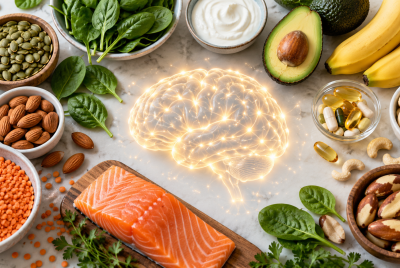
6. Eat a Balanced, Brain-Supportive Diet
Your brain depends on essential nutrients to maintain normal function.
Eating patterns such as the Mediterranean and MIND diets emphasize vegetables, fruits, whole grains, nuts, legumes, and healthy fats.
Consider including:
- Leafy greens: Provide folate and other important nutrients.
- Fatty fish: Supply omega-3 fatty acids.
- Berries: Contain polyphenols and other plant compounds.
- Nuts: Provide unsaturated fats and minerals.
- Eggs: Supply choline, which supports normal nervous-system function.
Choline helps your body produce acetylcholine, a neurotransmitter involved in memory and learning.
For practical food choices, explore the benefits of choline-rich foods for the brain.
No single food has been proven to increase cognitive reserve independently.
7. Manage Cardiovascular Risk Factors
Brain health depends partly on healthy blood vessels.
Conditions such as high blood pressure, diabetes, and elevated cholesterol can increase the risk of cognitive problems.
Regular health screenings, appropriate medical treatment, physical activity, and avoiding smoking can help manage these risks.
Addressing hearing or vision difficulties also supports communication and participation in mentally engaging activities.
Products for Supporting Brain Health
These five products can encourage mental stimulation, learning, and healthy habits that support cognitive health.
1. Rubik’s Cube Original 3×3 Puzzle Cub – A classic puzzle that challenges spatial reasoning, planning, and problem-solving skills.
2. Ravensburger The Greatest Show on Earth 1000-Piece Puzzle – An engaging jigsaw puzzle that encourages visual attention, concentration, and pattern recognition.
3. The Brain Health Kitchen by Annie Fenn, MD – A cookbook featuring nutritious recipes and practical information about brain-supportive eating habits.
4. Fit Simplify Resistance Loop Exercise Bands – Versatile resistance bands for home workouts that support strength and physical activity.
5. Keep Sharp by Sanjay Gupta, MD – An accessible guide exploring brain aging, lifelong learning, and lifestyle habits that support cognitive wellness.
Conclusion
Building cognitive reserve is a lifelong process shaped by learning, mentally engaging experiences, and healthy routines. Combining cognitive challenges with regular movement, social connections, and good nutrition gives your brain a stronger foundation for healthy aging. Start this week by choosing one unfamiliar skill and practicing it for 15 minutes a day. Consistent learning can make mental engagement a lasting part of your routine.
FAQs
1. Can cognitive reserve prevent Alzheimer’s disease?
It may help people maintain thinking abilities despite certain brain changes, potentially delaying noticeable symptoms. However, it doesn’t guarantee prevention of Alzheimer’s disease.
2. Can you build cognitive reserve after age 60?
Yes. Older adults can continue learning skills and participating in mentally stimulating activities. Research suggests lifelong experiences influence this, although the benefits of individual activities vary.
3. What activities are best for cognitive reserve?
Learning unfamiliar skills, engaging in meaningful social activities, and participating in mentally demanding hobbies are commonly associated with cognitive reserve. No single activity has been established as universally best.
4. Is cognitive reserve the same as neuroplasticity?
No. Neuroplasticity describes the brain’s capacity to change through experience and learning. It refers to adaptability that helps maintain cognitive performance despite aging or brain-related challenges.
5. Do brain supplements help build cognitive reserve?
No supplement has been conclusively proven to build cognitive reserve. Adequate nutrition supports normal brain functioning, but learning, physical activity, and other healthy habits remain important for long-term cognitive health.