Saffron Supplements for Brain Health: What to Know
We may earn a commission for purchases made using our links. Please see our disclosure for more details.
Saffron is more prominently known as the bright red spice that colors and flavors paella, but it also has piqued people’s interest in the nootropics arena. Saffron supplements are also now included in products claiming to support mood, memory, focus and stress. Some of those claims have human research to back them up, and others take the evidence further than it wants to go.
If you are taking saffron for brain function, the details matter. The extract, the dose and what the product is meant to be used for can influence if it makes sense or not. But it’s also crucial to understand that saffron is not a substitute for treatment for depression, dementia or other medical condition.
What Are Saffron Supplements?
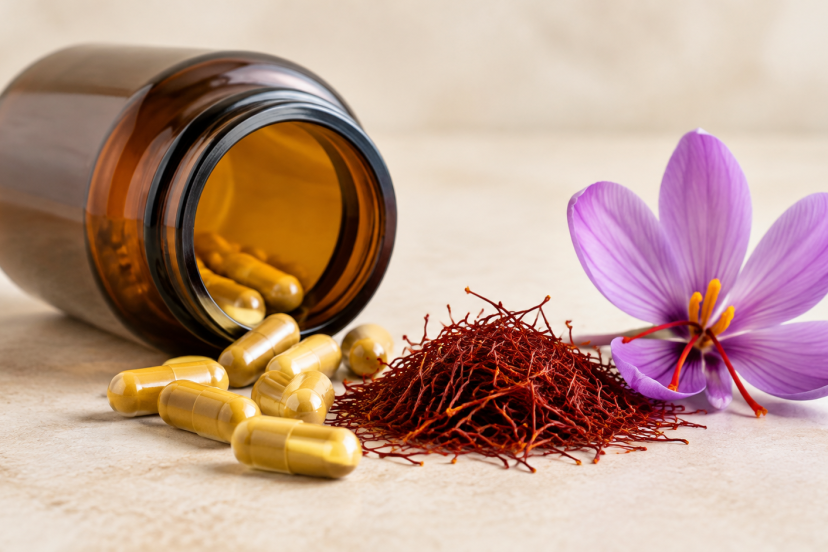
Saffron comes from the dried stigmas of Crocus sativus flowers. Each flower produces only three stigmas, which helps explain why genuine saffron costs so much.
Supplements usually contain a concentrated stigma extract in a capsule. The key natural compounds include crocin, crocetin, and safranal. Researchers have studied these compounds for their possible antioxidant, anti-inflammatory, and nervous-system effects.
An extract is not automatically better because it lists a large milligram amount. Standardization tells you more. For example, some formulas identify a defined concentration of safranal or use a branded extract such as affron. This makes each serving more consistent than an unspecified powder.
How Might Saffron Support Brain Health?
Scientists have proposed several possible mechanisms. Crocin and related compounds may help limit oxidative stress, while saffron may influence inflammatory pathways and chemicals involved in mood signaling. Laboratory findings also raise questions about effects on amyloid buildup, but those early findings do not prove that a supplement prevents dementia.
Mood may provide an indirect cognitive benefit. Stress, low mood, and poor sleep can make concentration and recall feel harder. If saffron helps someone feel calmer or sleep better, that person may notice clearer thinking even without a direct nootropic effect.
That is also why supplements work best within broader daily brain health habits such as exercise, balanced meals, consistent sleep, and social connection.
What Does the Research Actually Show?
Mood and emotional well-being
Mood support has a stronger evidence base than focus enhancement in healthy adults. A systematic review of randomized controlled trials found encouraging results for depressive symptoms. However, many included trials were small and short, so the findings do not justify replacing prescribed therapy with saffron.
Some trials have used roughly 28 to 30 mg of a standardized extract per day. Results from one extract or population do not automatically apply to every bottle on the market.
Memory and cognitive decline
Research involving mild cognitive impairment and Alzheimer’s disease has also produced promising signals. A systematic review of saffron and cognitive function found possible benefits, but its authors urged caution because the evidence came from a small number of studies with potential bias.
This does not show that saffron prevents memory loss or improves exam performance in healthy people. Larger, independent trials are still needed. Anyone experiencing new or worsening memory problems should seek a medical evaluation rather than self-treating with a supplement.
Dosage, Timing, and Expectations
Many clinical studies have used about 30 mg daily of a standardized extract, often for six to twelve weeks. Other products contain 88.5 mg or more because their extracts use different concentrations. Milligrams alone therefore cannot tell you whether two products are equivalent.
Follow the product label and do not double the dose in hopes of faster results. Saffron is not a stimulant, so you should not expect an immediate surge in attention. If it helps, the change may feel subtle and develop over several weeks.
You can take most capsules with food if they upset your stomach. Consistency matters more than whether you take them in the morning or evening. Keep a simple record of mood, sleep, side effects, and any other changes so you can judge the product more objectively.
Safety and Possible Side Effects
Commonly reported side effects include nausea, headache, dizziness, dry mouth, or changes in appetite. Stop taking the product and seek help if you develop signs of an allergic reaction or another serious symptom.
Speak with a doctor or pharmacist before using saffron if you take antidepressants, sedatives, blood thinners, or medicines that affect blood pressure or blood sugar. People with bipolar disorder should also ask a clinician first because supplements marketed for mood may not be appropriate in every situation.
Avoid concentrated saffron supplements during pregnancy unless an obstetric clinician specifically approves them. Breastfeeding parents, children, and people preparing for surgery also need professional guidance. Culinary amounts used in food are different from concentrated extracts.
For a broader look at evidence, labels, and interactions, read this guide to choosing brain health supplements.
Recommended Saffron Supplements
These five options stand out for clear extract information or useful formulation differences; inclusion does not guarantee that a product will work for you.
1. Sports Research Pure Saffron 30 mg
This once-daily option uses affron standardized to 3.5% Lepticrosalides. The company states that it is vegan, non-GMO, manufactured in a cGMP-compliant facility, and third-party tested. Its 30 mg serving closely resembles amounts used in several saffron studies.
2. Natural Factors Stress-Relax affron Saffron
Natural Factors provides 28 mg of affron in a vegetarian capsule. It is a straightforward choice for shoppers who want a branded, standardized extract without building a large multi-ingredient stack.
3. VINATURA Organic Saffron 28 mg
This product uses organic affron standardized to 3.5% Lepticrosalides. The label states that it is vegan and third-party tested. It may suit shoppers who value organic certification, though certification does not establish greater cognitive effectiveness.
4. Double Wood Saffron Extract 88.5 mg
Double Wood lists 88.5 mg of extract standardized to at least 0.3% safranal per capsule. The larger number should not be compared directly with a 28 mg affron serving because the standardization differs. Its high capsule count may appeal to regular users.
5. Life Extension Optimized Saffron
Life Extension uses Satiereal saffron extract in a vegetarian, gluten-free formula. This product is promoted mainly for appetite and snacking support, so it is less directly aligned with cognitive research. It still offers a recognizable standardized-extract option for readers comparing saffron formulas.
Conclusion
Saffron supplements have credible early research behind their potential effects on mood and cognitive decline, but they are not proven memory boosters for healthy adults. Choose a transparent, standardized extract, use the labeled dose, and give more weight to sleep, exercise, nutrition, and medical care than to any capsule.
If you take medication, are pregnant, have bipolar disorder, or want saffron for persistent mood or memory symptoms, speak with a qualified healthcare professional before starting it.
FAQs
Do saffron supplements improve memory?
Small clinical studies suggest possible cognitive benefits in people with mild cognitive impairment or Alzheimer’s disease. Evidence remains too limited to claim that saffron improves memory in healthy adults or prevents dementia.
Does saffron relieve anxiety or depression?
Research suggests saffron may reduce some mild-to-moderate mood symptoms. It is not a substitute for therapy, prescribed medication, or urgent mental-health care. Discuss it with your clinician, especially if you already take psychiatric medicine.
When can you expect to notice saffron’s effects?
Clinical trials often assess results after several weeks. Do not judge it like caffeine or another fast-acting stimulant. Track changes over time while following the labeled dose.
Is 30 mg of saffron a standard daily dose?
About 28 to 30 mg daily is common for certain standardized extracts in human studies. Extracts vary, however, so follow the specific label and ask a healthcare professional when unsure.
Can I take saffron with other nootropics?
Possibly, but combining products makes interactions and side effects harder to identify. Review the full stack with a pharmacist or doctor, then add only one new supplement at a time.